Chivay to Ollantaytambo
At 7 in the morning, Chivay was cold, cloudy and already full of bustling market traders ready to start the day. Our group was somewhat less productive but fortunately, we only had to get on a bus and be whisked around the local area. While we have both absolutely loved our tour so far, this was by far the most touristy we had felt so far. Our usual guide, Elmer, had remained with us but since leaving Arequipa, we were being led by a local woman (whose name escapes me). She was very knowledgeable and was keen to share lots of information about places we passed as well as ensuring we didn’t miss any of the sights.
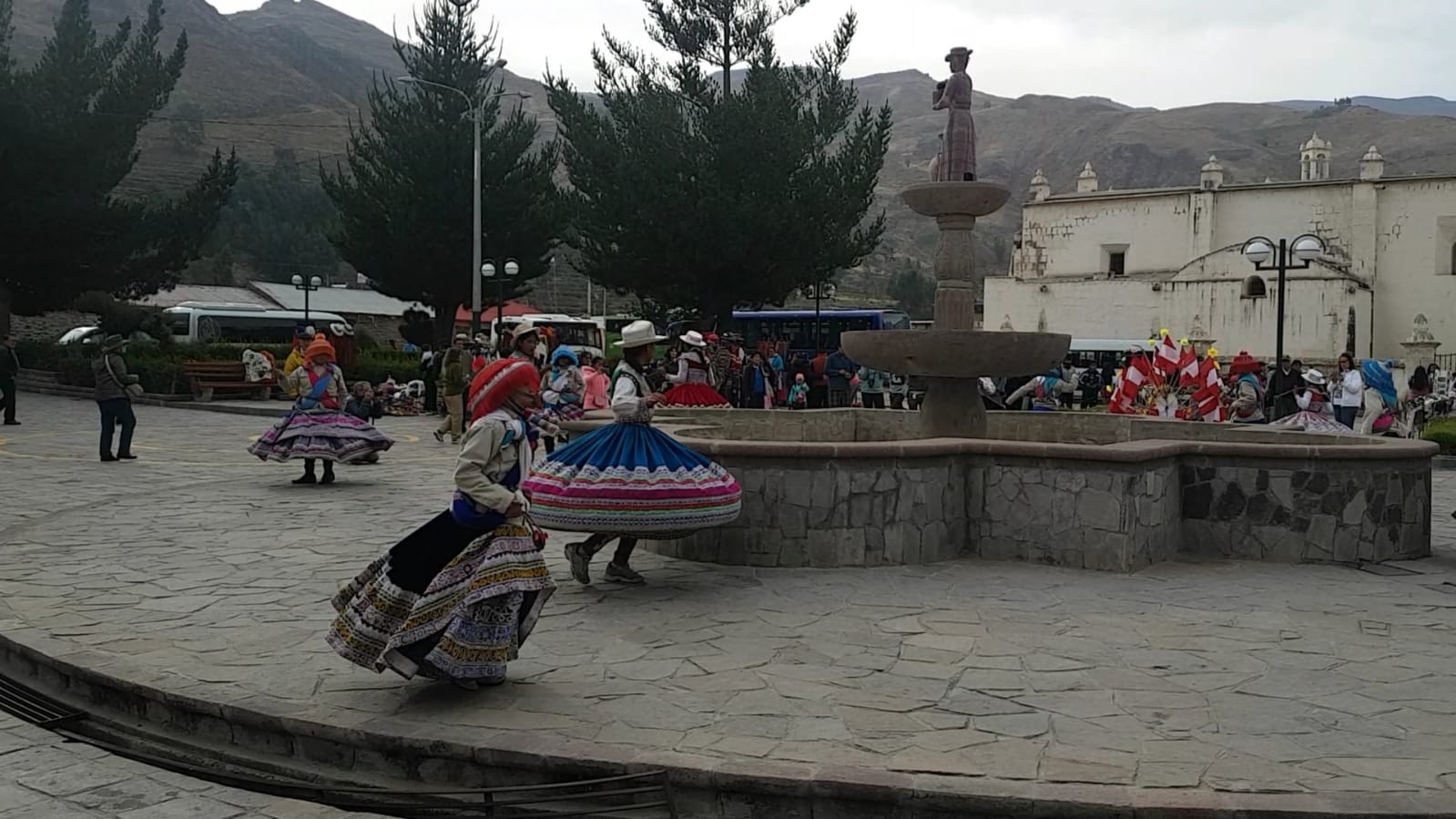
Our first stop was to a little village where the local primary school children were performing a traditional Peruvian dance while in traditional dress. Apparently the reason for this is that once children in Peru finish primary school and then secondary school, it is typical for them to try and raise enough money to go away for a little while, similar to a school residential in the UK. The difference here is that the children will raise money to go away, so the amount they are able to save dictates where they can go; some children may simply go a little way for a picnic whereas some may go away to the coast for a week. As tourism is increasing in Peru, the children perform this dance and ask tourists for tips.
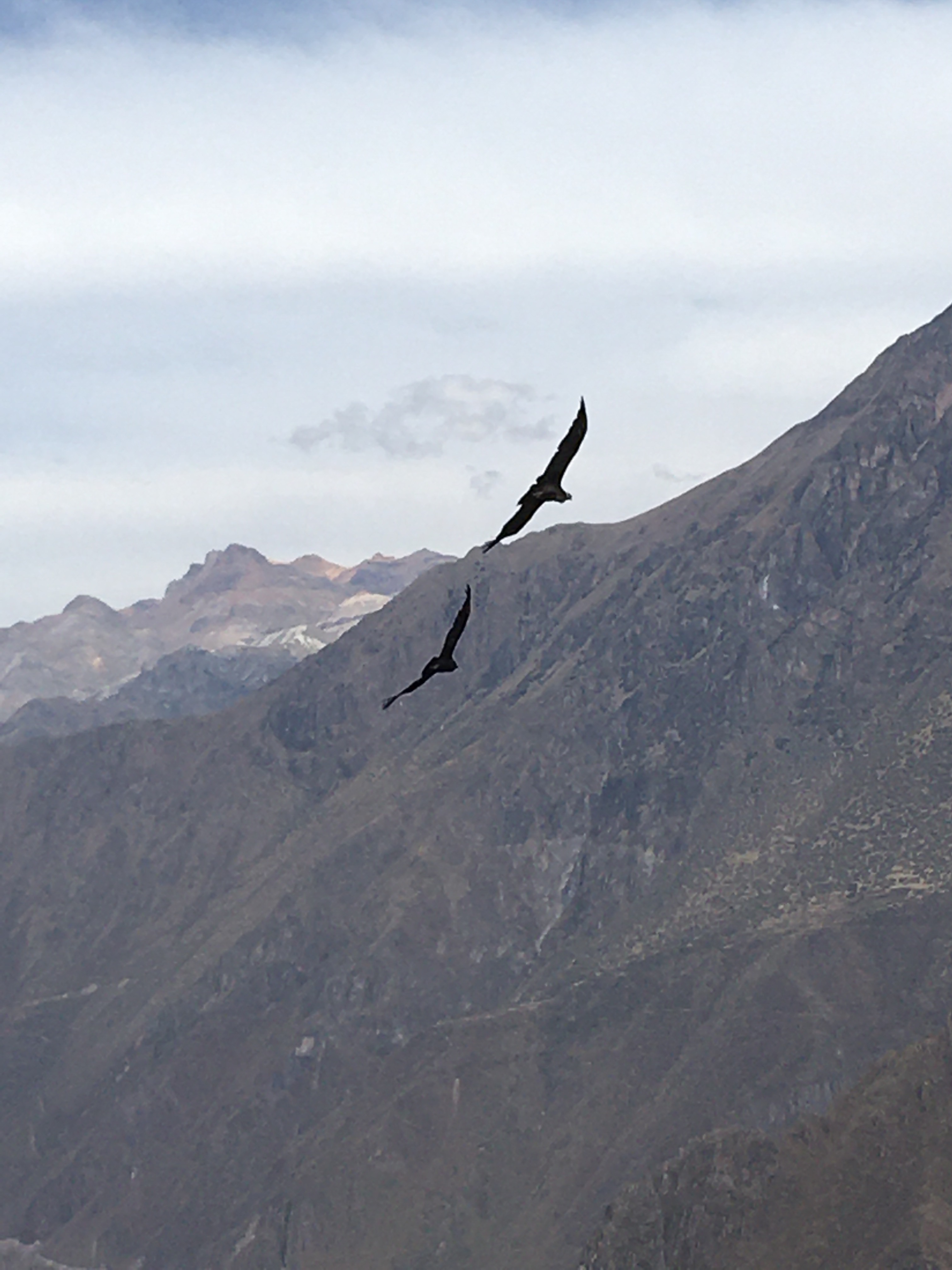
After watching the children dance, we moved on to Colca Canyon. Here, we left the bus to go on a brief walk along the canyon in search of condor. These birds have a wingspan of around 3m and are black with a white collar. We walked to the first viewpoint and loitered there hopefully while learning a little more about them (they survive on meat, typically from animals which are already dead, and only eat around once every four weeks. At each meal, they can eat around 4kg of food, which is even more impressive when you consider they only weigh around 8-15kg themselves! If they are very hungry, they do occasionally resort to killing animals – especially cows – in a rather gruesome way).
Having not seen any condor, we walked on a little further until someone spotted some birds in the distance. We picked up the pace and moved on down a rather narrow and rocky path along the canyon, hoping nobody would trip and fall the 1-2km to their death via a lot of cacti and rocks! Our enthusiasm paid off and we reached a little outcrop where we were able to watch the condor rising with the thermals. We were lucky enough to see five of these incredible birds and stood there for a while, all completely mesmerised.
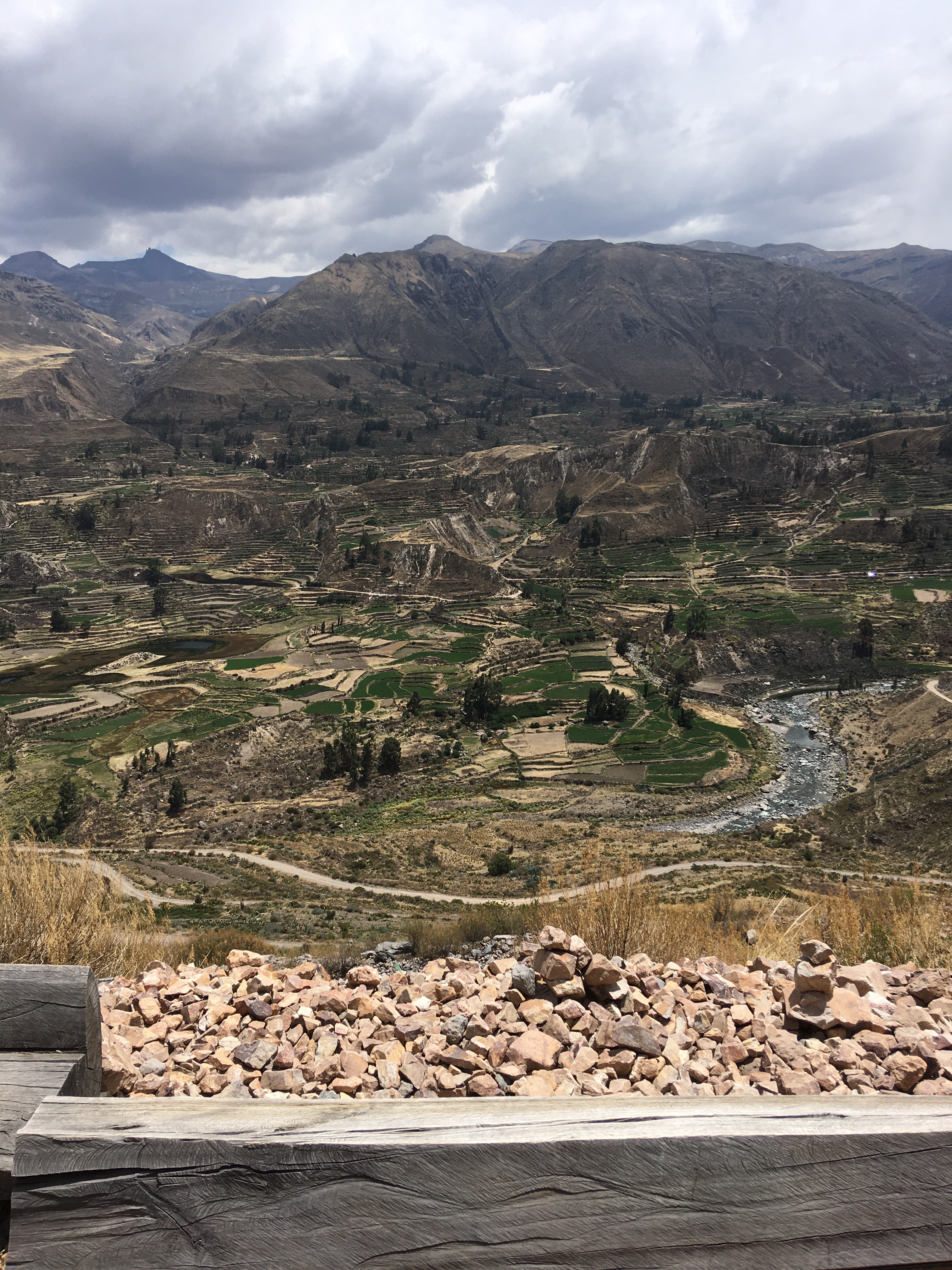
After the condor left, we finished our walk and returned back to the bus. Our tour continued by taking us to several viewing spots to see the valleys and the terraces which had been cut in to the mountains. It was clearly a well trodden tourist path as we kept bumping into the same faces at each stop. Every viewing place was also accompanied by women in traditional Peruvian dress selling souvenirs and trinkets, as well as refreshments here and there. At one such stop, we sampled the fruit of the tall cactus plant which looked and tasted like sour kiwi, but which you could imagine was instantly upping your vitamin C intake and improving your health!
At the end of our tour, we headed back to Arequipa on the bus. We spent a few hours here before catching a night bus to Cusco.
We arrived bright and early, and having not enjoyed this night bus quite so much as our previous experiences, we were all quite ready to get out in the fresh air for a walk and some food. We had breakfast and then Elmer (our guide) took us on a walking tour of the city. Once the capital of the Incan empire, Cusco is now very much a reminder of the Spanish invasion with colonial buildings throughout. Up on the mountainside around the city are the homes of many of the locals, which look much more traditional. While Cusco is a beautiful city, it was very much geared towards tourists, and particularly those who were coming to visit Machu Picchu. As we’ll be heading back after our trek, we took the opportunity to spend the day not doing very much and passing the evening with a drink or two in a bar with some of our group members.
The next day, we boarded our bus with a backdrop of heavy rain and thunder. Having spent the evening out, it was very much a quiet journey as we headed to our next destination: a home stay with some local families.
Our tour was organised by G Adventures, and as part of their business, they support local projects in the areas where they run their tours. One of these projects was a mountain village called Ccaccaccollo which had suffered from a landslide in the mid 2000s. G Adventures helped them to rebuild their village and, in return for letting us stay with them for one night, we also learned about their traditional way of life and their business.
We arrived at Ccaccaccollo in the afternoon where we were greeted by six or seven women in traditional dress, and one man wearing a traditional jacket over his much more modern T-shirt, chinos and trainers. They were all holding flowers and greeted us warmly. We were assigned a mami or papi and were led to our home for the night. Once we had been shown to our rooms, we had lunch with our new families. Tom and I were sent away with another member of our group, Patrick, to stay with Salomon, the only young man in the welcome committee. While we had been warned that some of the families, particularly of the older generation, may only speak Quechua, we were very relieved to find that Salomon spoke Spanish.
Over a lunch of corn soup and some sort of potato stew with cheese and rice, we chatted with Salomon (in no particular order!) about football, Peruvian and English imports and exports, and our countries. Salomon studies Economics at Cusco University and was very interesting to talk to. After lunch, we were able to go and relax and play cards for an hour or so before we were joined by Salomon and his mother who dressed us in the traditional Peruvian outfits.
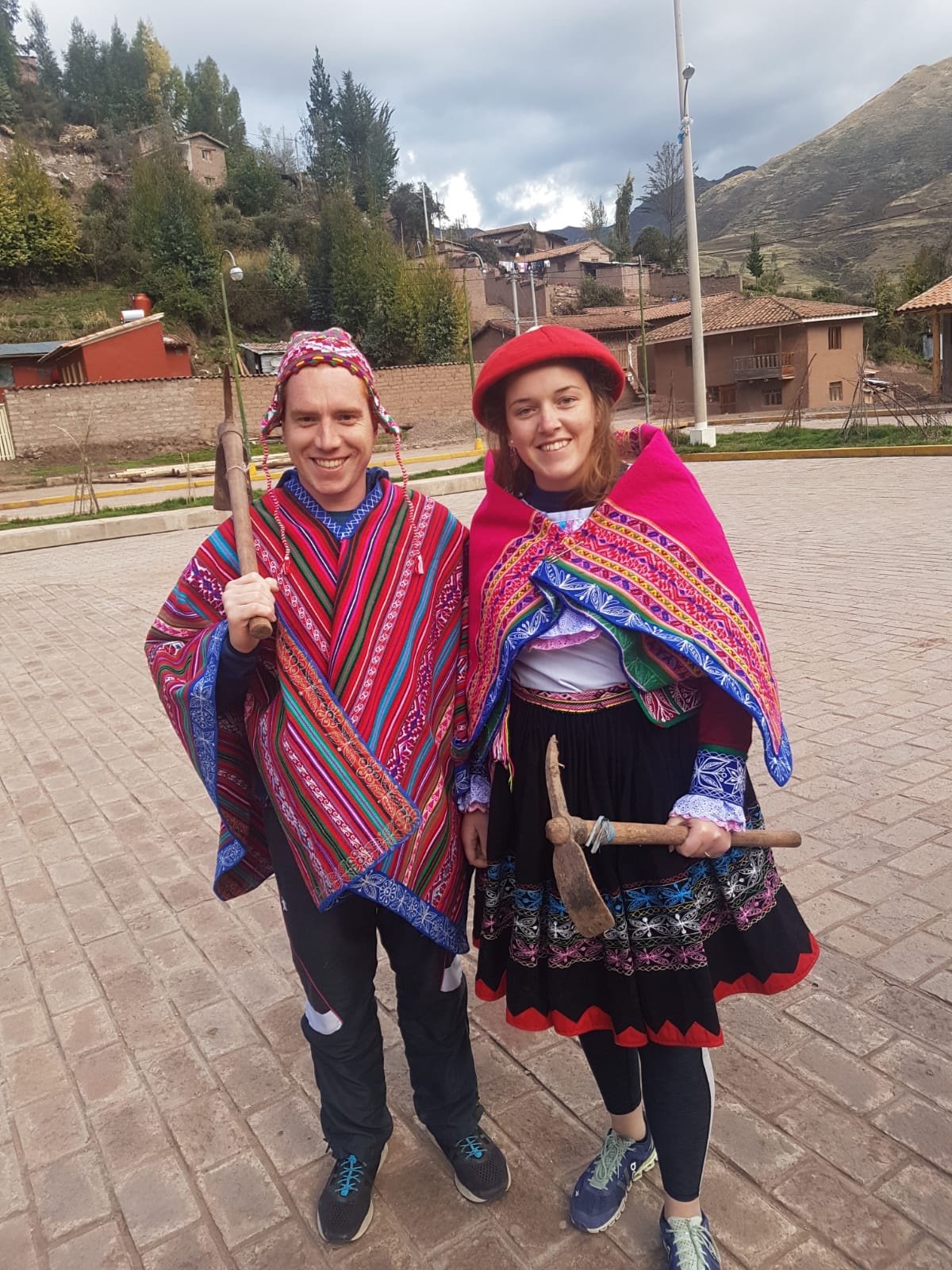
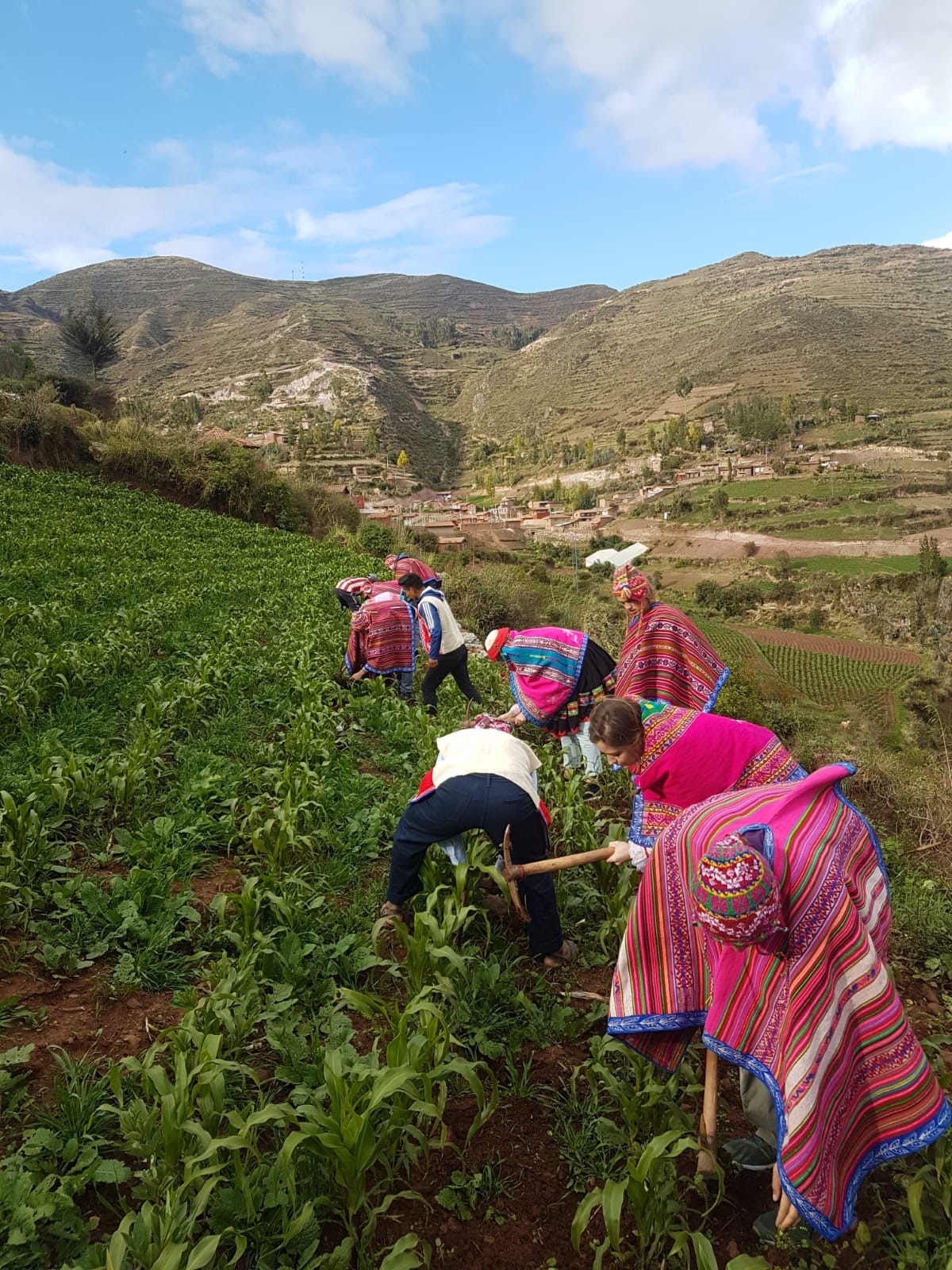
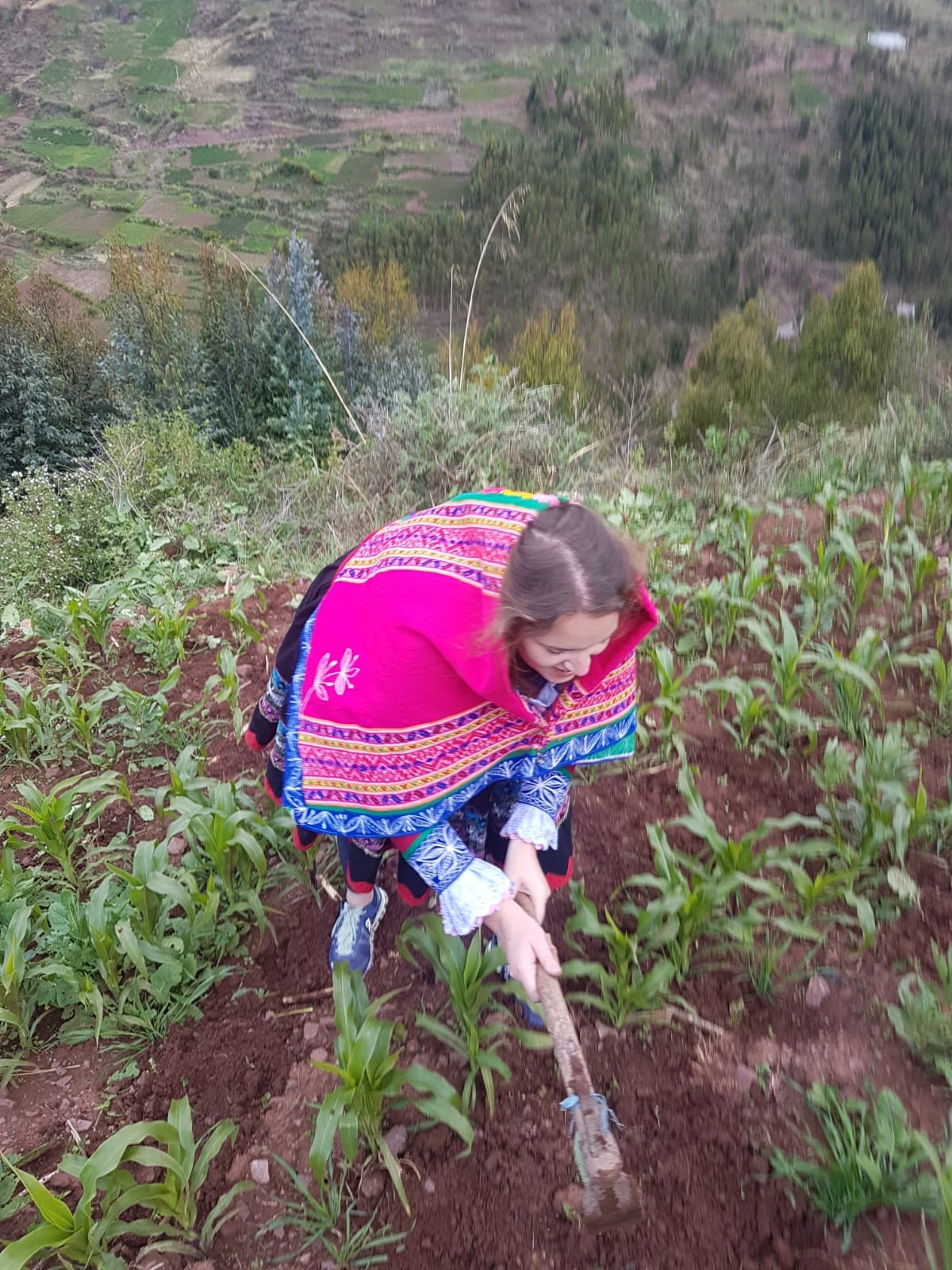
While we understood that we were being shown the traditional way of life, it felt a little uncomfortable to be dressed up and sent into the fields to clear the weeds between the corn plants, especially when most of the other people working the fields were in much more casual attire! We spent around half an hour weeding with our pick axes and wondering just how much work we were actually causing the locals by “helping”. Afterwards, we abandoned our pick axes and joined some of the younger people on the football pitch, where we just about held our own against some very skilled South American football fans (one of whom was wearing Crocs).
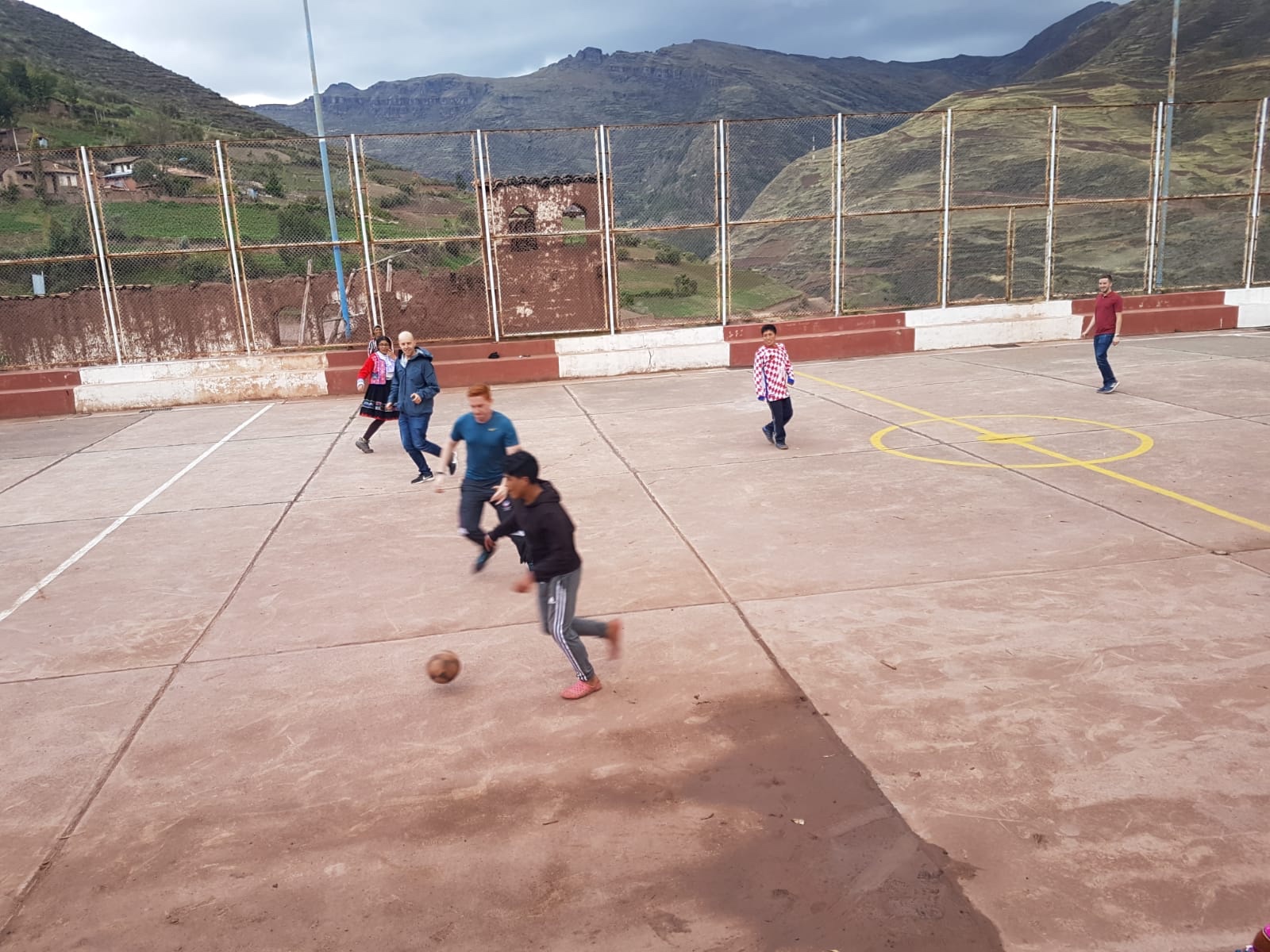
As energy levels and enthusiasm started to wane, the rain started up and we headed back to our homes where we reverted to our normal wardrobes for dinner. As Salomon had to leave, we were introduced to his two nephews who would join us to eat. Tiago was four and thoroughly enjoyed being the comedian of the table, while Jimi was a little more reserved and told us he was at high school, preparing to go to university to study politics. We ate another huge home-cooked meal of quinoa soup and vegetable fritters with rice before heading to bed for an early night.
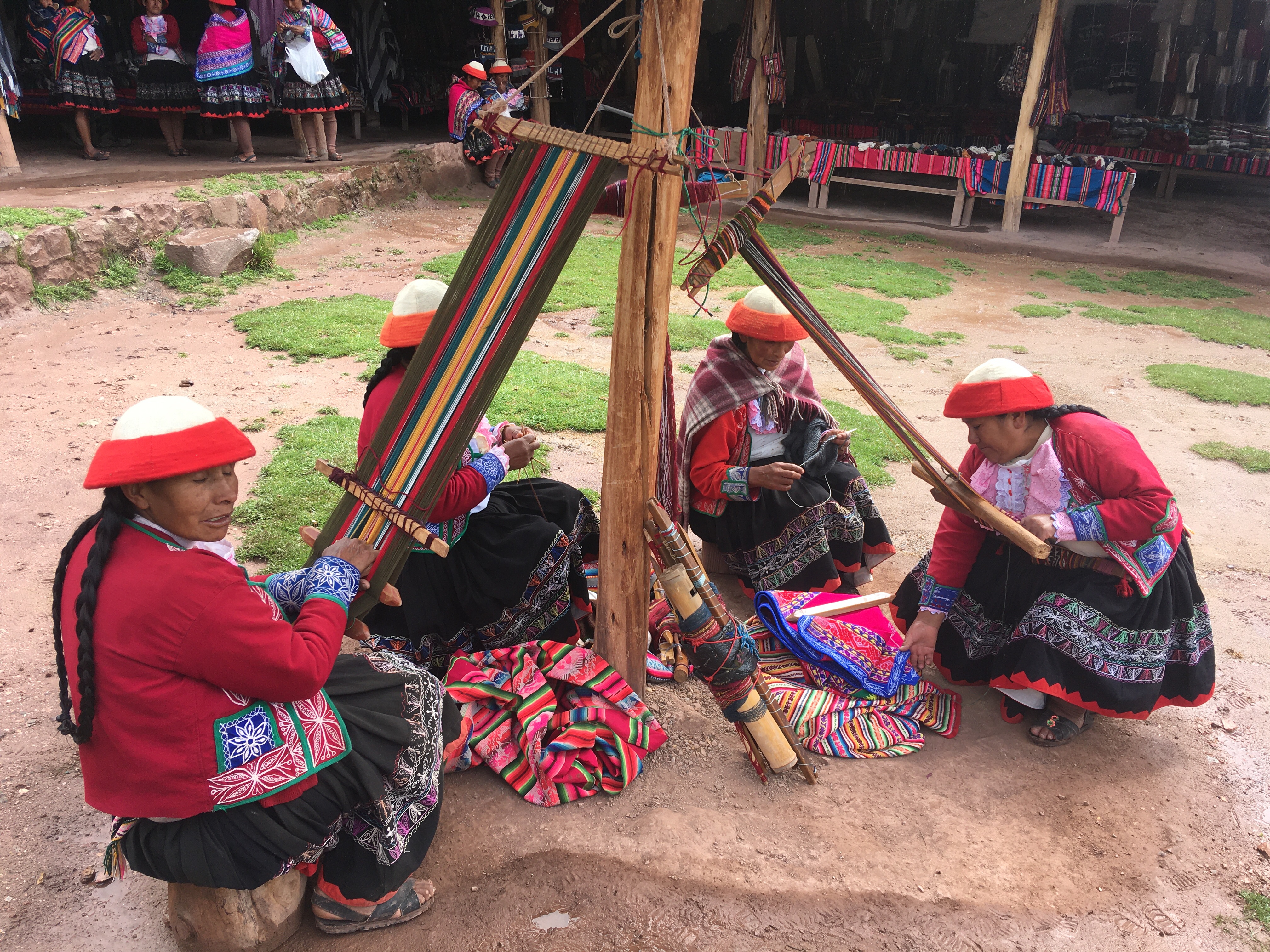
Breakfast was an unusual combination for us: we started with some kind of porridge in a mug and then moved on to vegetable omelettes. While the omelettes were delicious, none of us managed more than half a mug of the porridge thing. We also met the father of the house, Pedro, who asked us to sign his guestbook before we headed up to the women’s weaving co-operative where they showed us how they spun and dyed their yarn before weaving it.
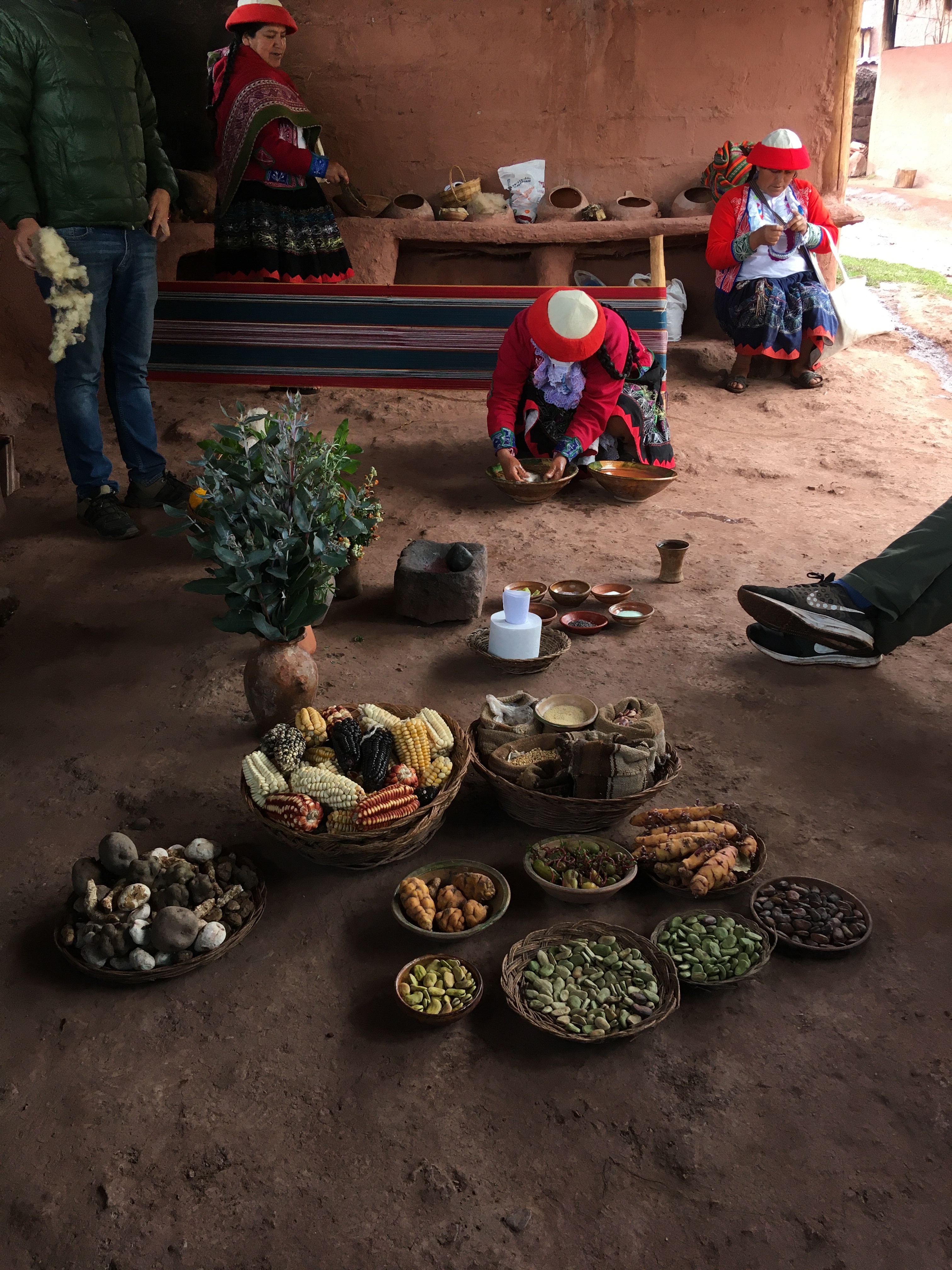
Cochineal beetles are a parasite found on cacti and these are used as the basis for the red, orange, purple and pink dyes. Adding some lime, alum rock (similar to quartz), salt or sulphur changed the colour from red to one of the other colours listed above. They also use eucalyptus and other plants to make various greens and blues.
Having been shown how they make their yarn, they then proceeded to show us how they weave it to make the instantly recognisable Peruvian patterns. They also showed us some of the other crops which they are now able to grow for food, including some of the 3500 types of potato that Peru produces.
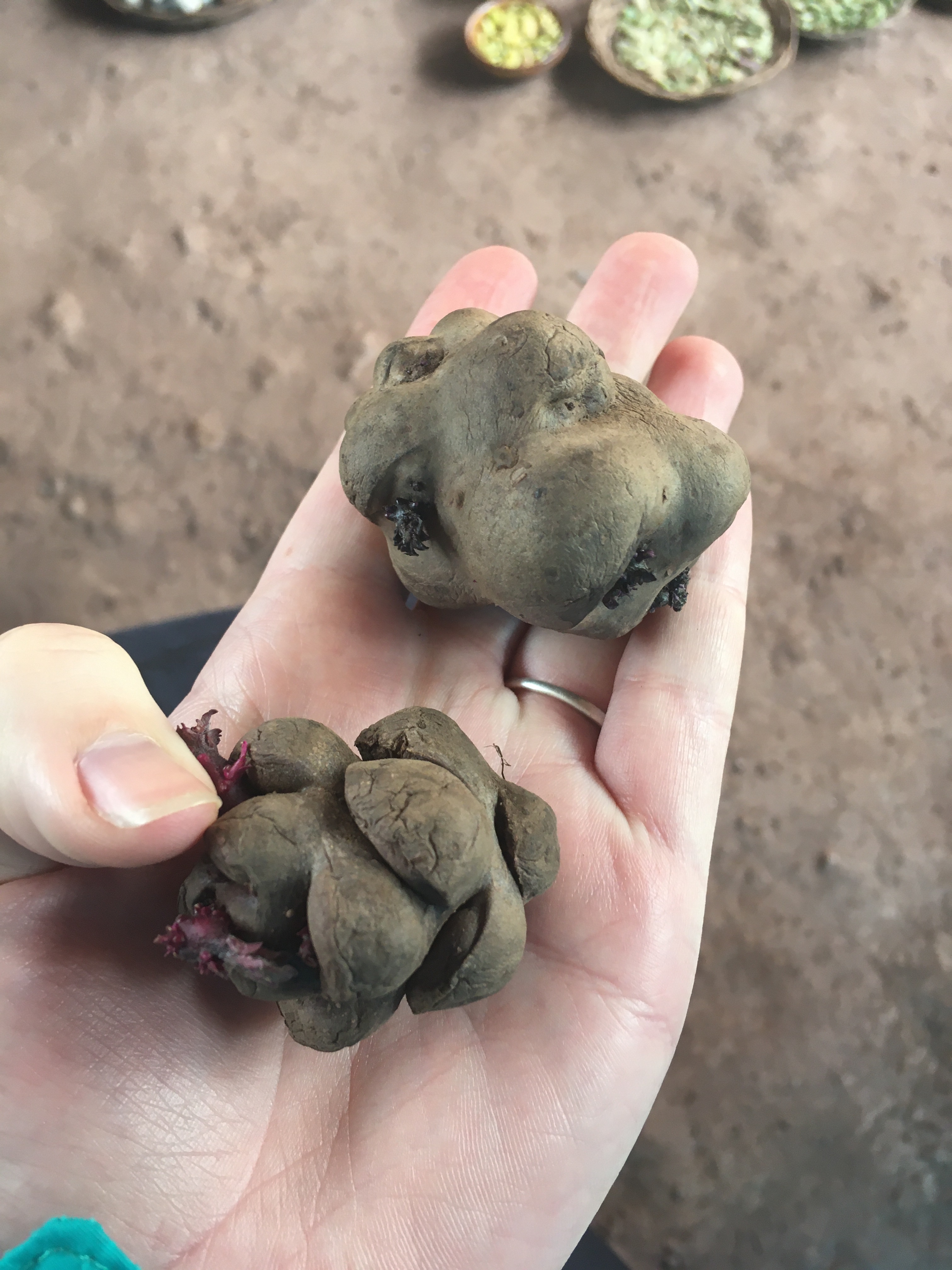
After our lesson in Peruvian weaving, we were able to walk around the site and watch as the women worked and buy the fruits of their labour. We could also see their llamas, alpacas and guinea pigs and chat to them as they worked. They were horrified to discover that we don’t eat guinea pig and insisted that it’s incredibly good for you as it’s high in vitamins and iron and is excellent for anaemia! We promised we would try it before we left Peru.
Having spent the morning with these hardworking women, we packed up and headed off to Ollantaytambo, the last town before our Machu Picchu trek. Fortunately, we were able to keep our promise to the weavers as we stopped at a little town which is famous for its guinea pig on a stick. Around ten of us chipped in to try this delicacy, locally known as cuy due to the sound the guinea pigs make. Look away now if you’re at all squeamish!
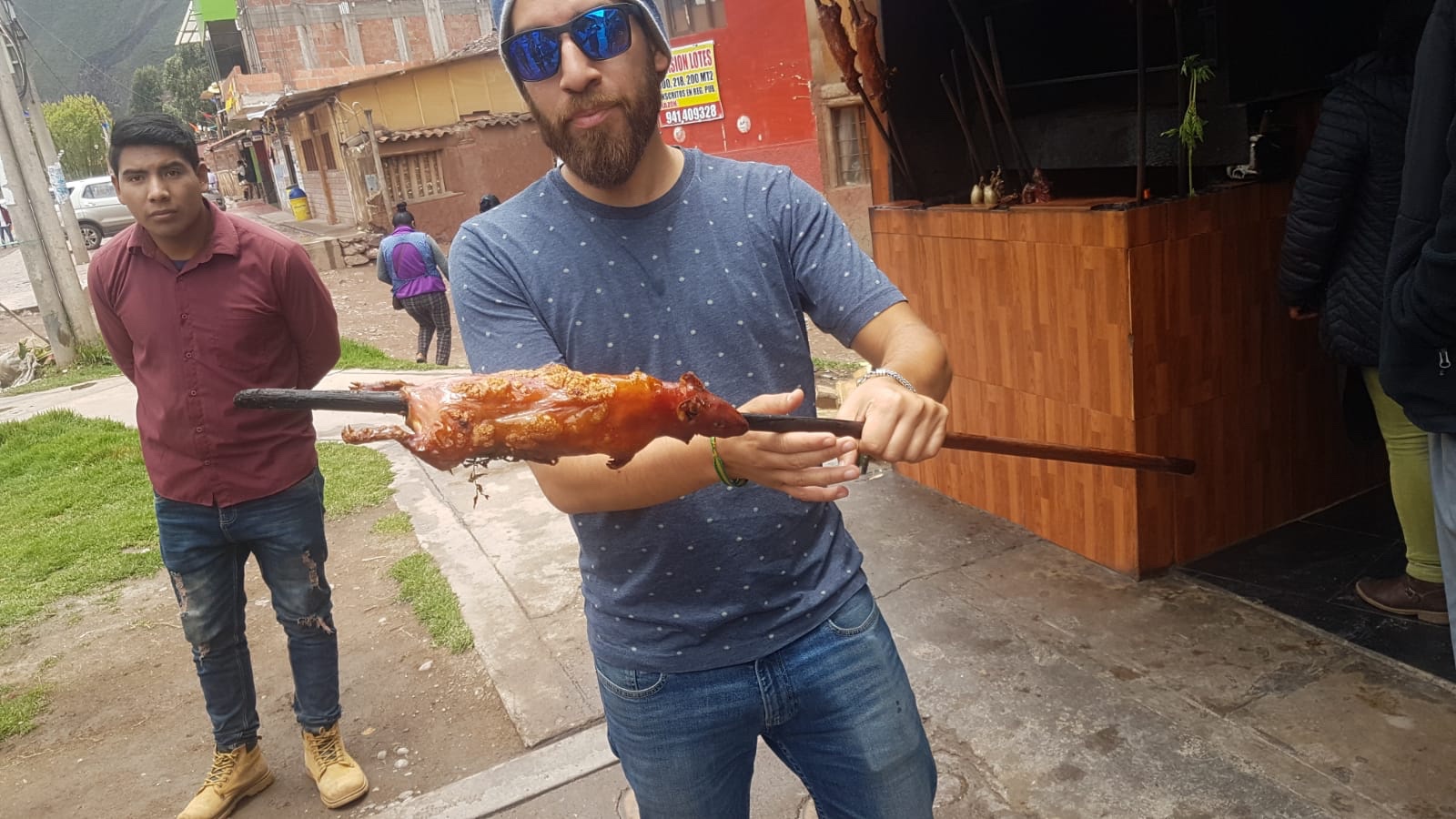
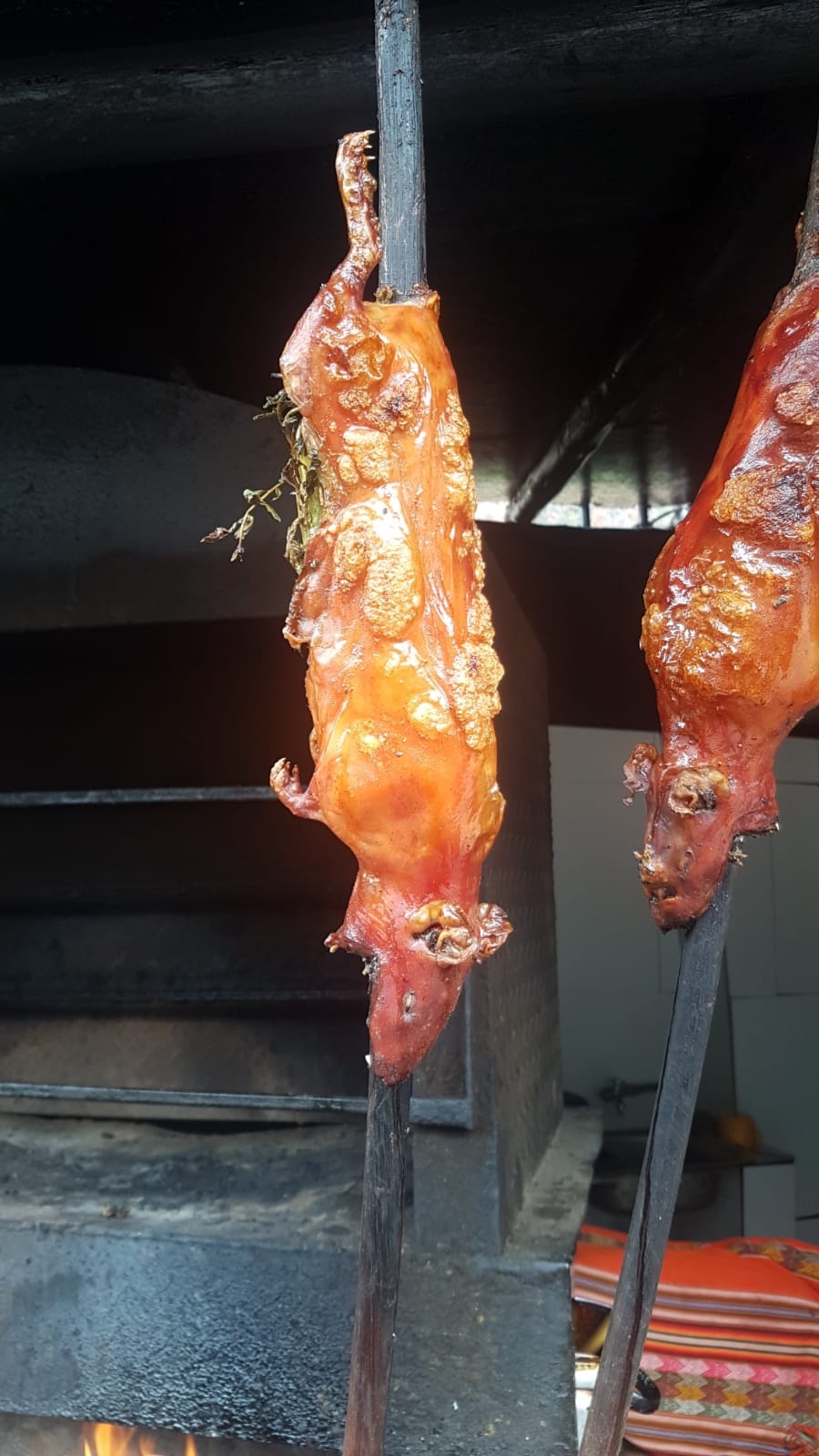
While it wasn’t too bad, most of us only managed a little bite, just to say we’d tried it. The head which sat in the innocuous kebab takeaway box alongside the meat and potatoes was pretty off-putting, and the herbs used to stuff the animal were fairly overpowering. Nevertheless, we came to Peru and tried guinea pig!
Tomorrow, we start our trek to Machu Picchu, so we’ll update you on that in around five days! In the meantime, please keep your fingers crossed for us that the weather is kind!
 Honeymoon Bootcamp
The cuy looks tasty – big beggar too! Regarding the condors eating 4kg of food at one sitting, I’m not sure why you are surprised … Tom can! 😉 Ix
LikeLike
The cuy was … interesting! Not sure I’ll be having it again though. We decided Tom could probably do 4kg of food in one sitting, but probably not a third of his body weight, though he’s tempted to find out!
LikeLike