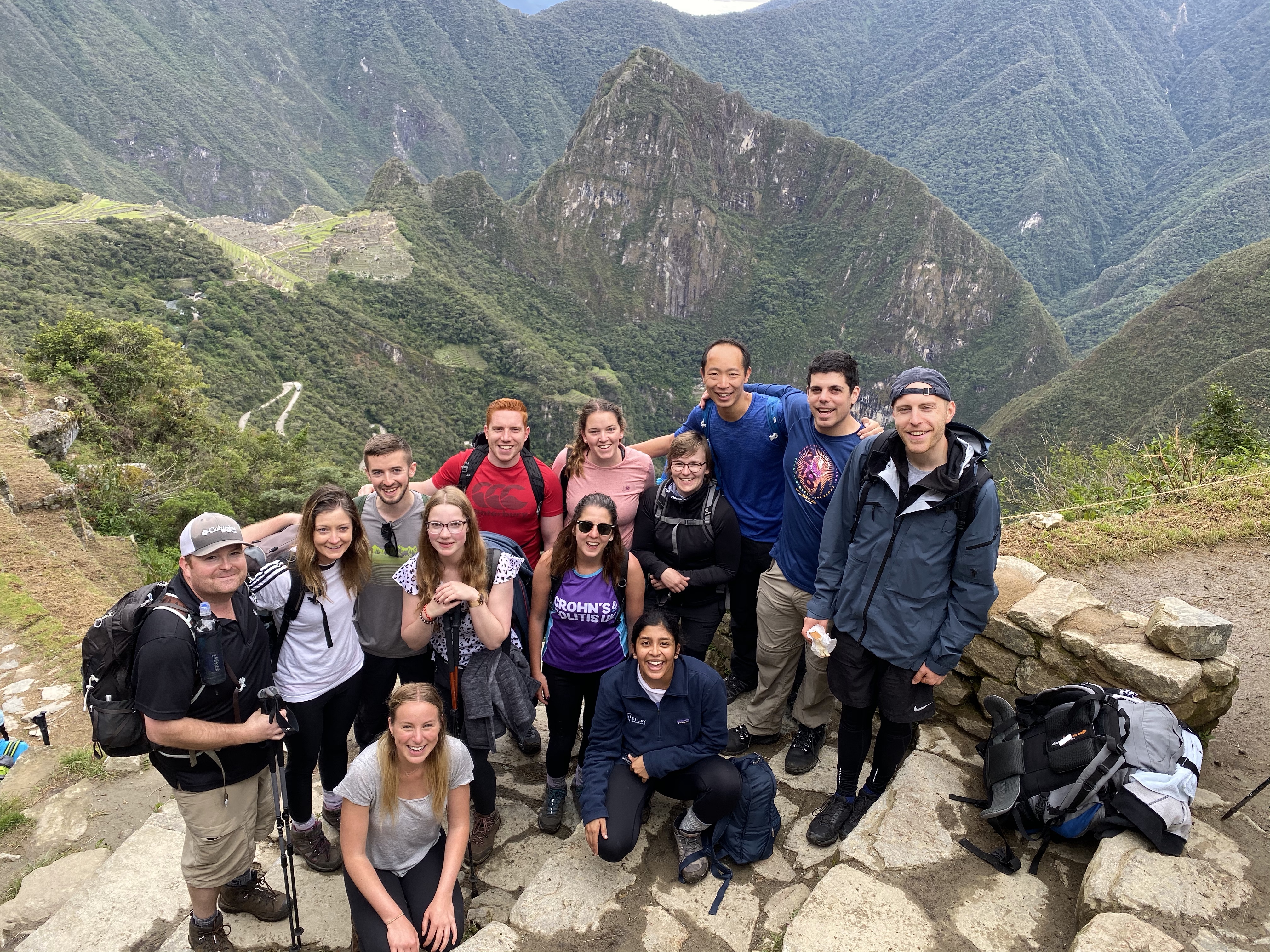
After four days of hiking with limited access to washing facilities, we were certainly not at our most fragrant or photogenic upon arrival at the Sun Gate (known as Intipunku in Quechua). This building was once a guardhouse to the entrance of Machu Picchu and what remains of it is no less impressive, allowing hikers to catch their first glimpse of the citadel that lies beneath. We had been lucky for the whole of our trek – bearing in mind November is the start of the the rainy season, we only had rain while in our tents at night, save for a brief half hour in the rainforest. We had also been warned that it was likely our view of Machu Picchu would be obscured by clouds.
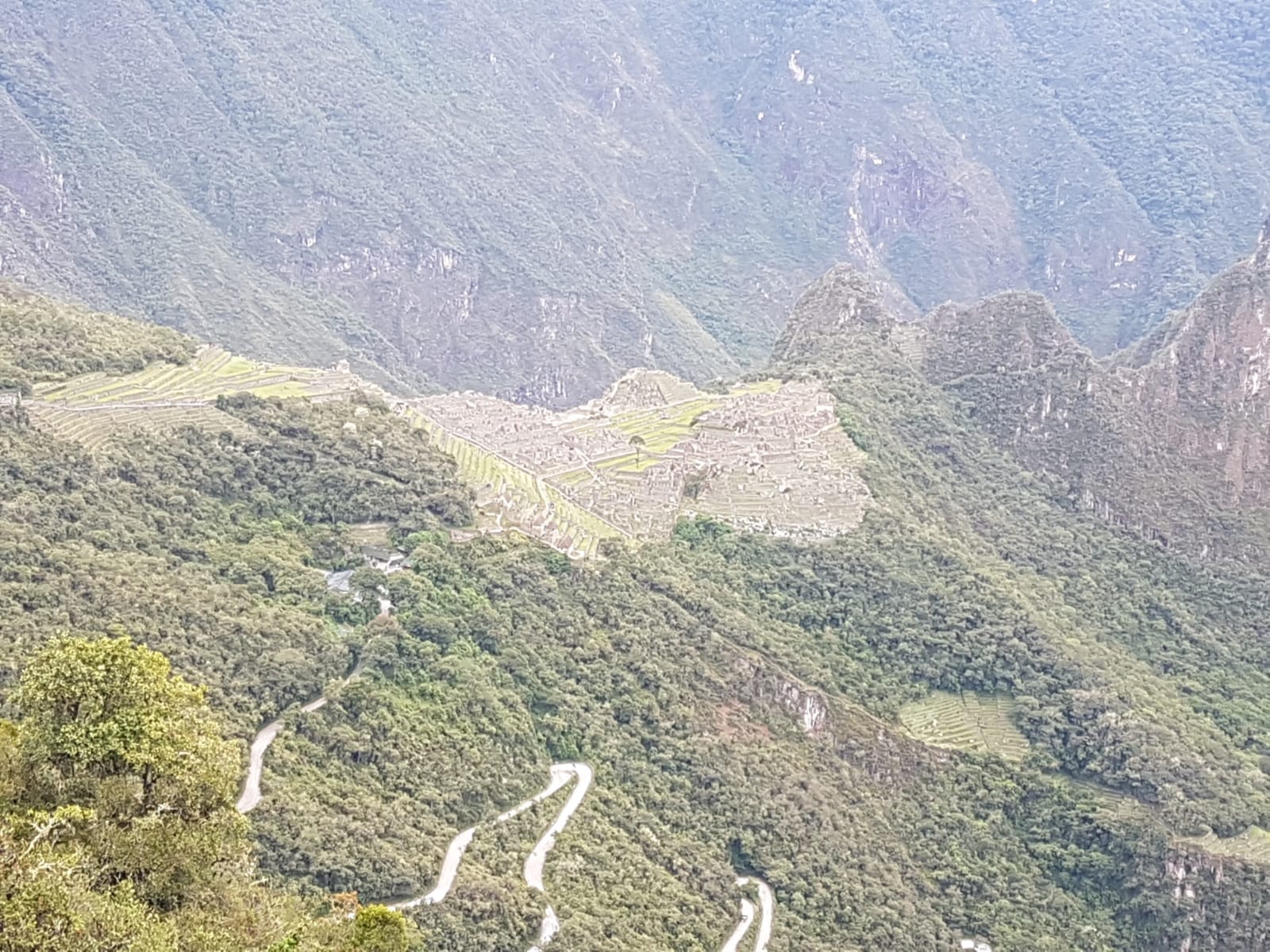
Unbelievably, our run of good luck continued and our first view of Machu Picchu was accentuated by the glorious sunlight. We took several photos and then began our descent down the path into the estate. This walk took another 45 minutes but felt a lot quicker than any of our previous stretches!
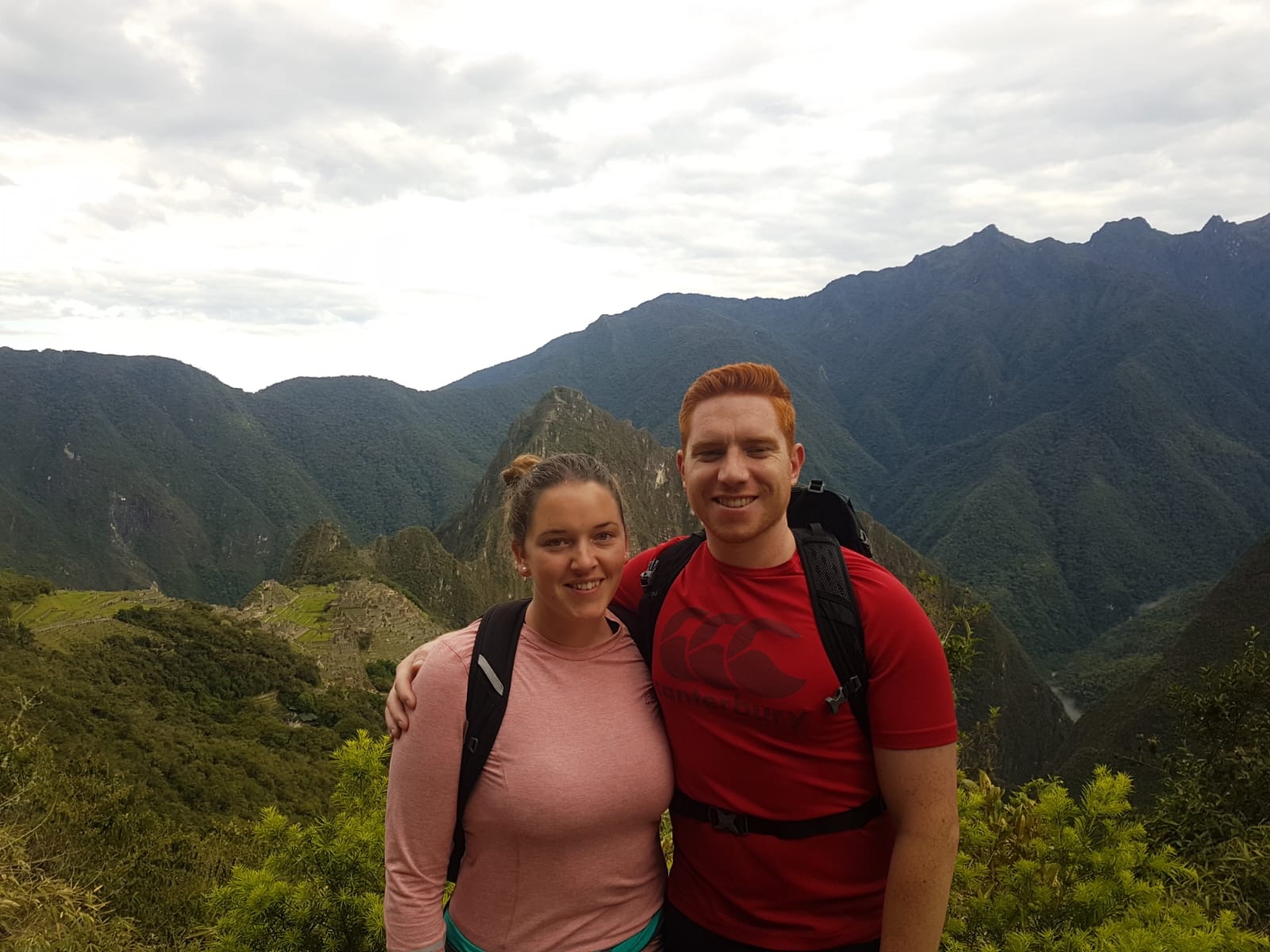
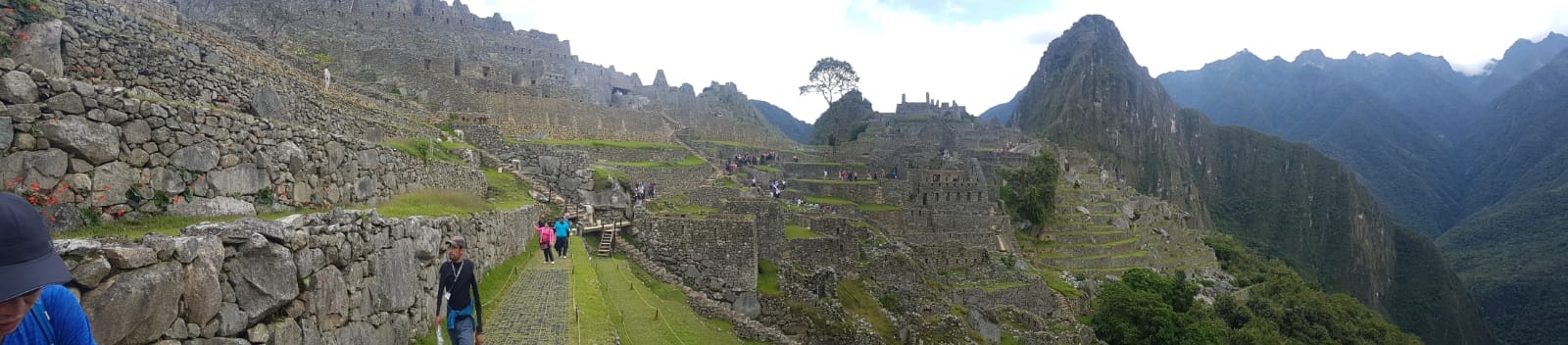
At the bottom of the path, we reached the typical photo spot which allows visitors to take pictures of both them and the citadel. As it was still early, the ruins were not yet full of people so we were able to look out over the site and take it all in.
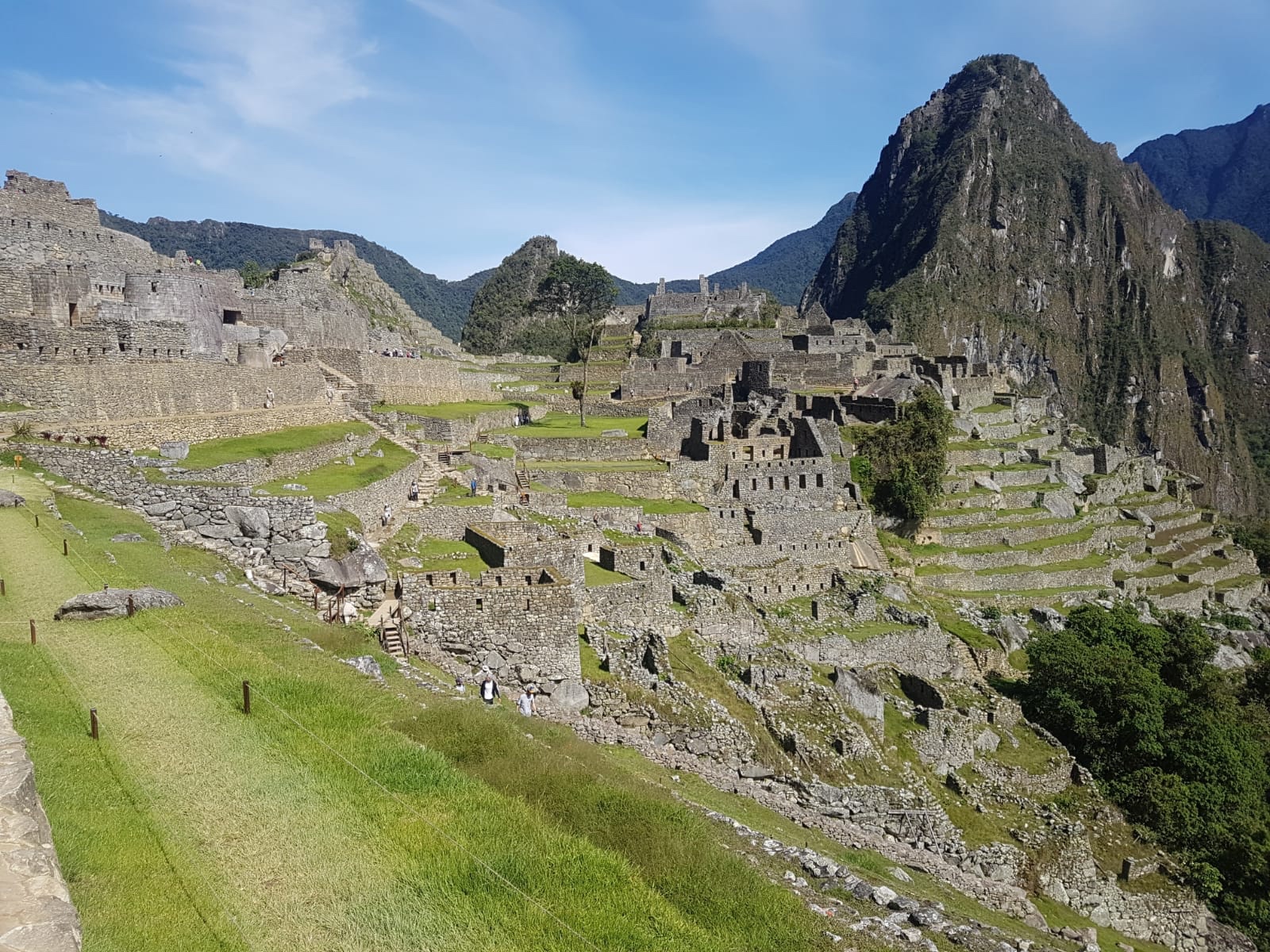
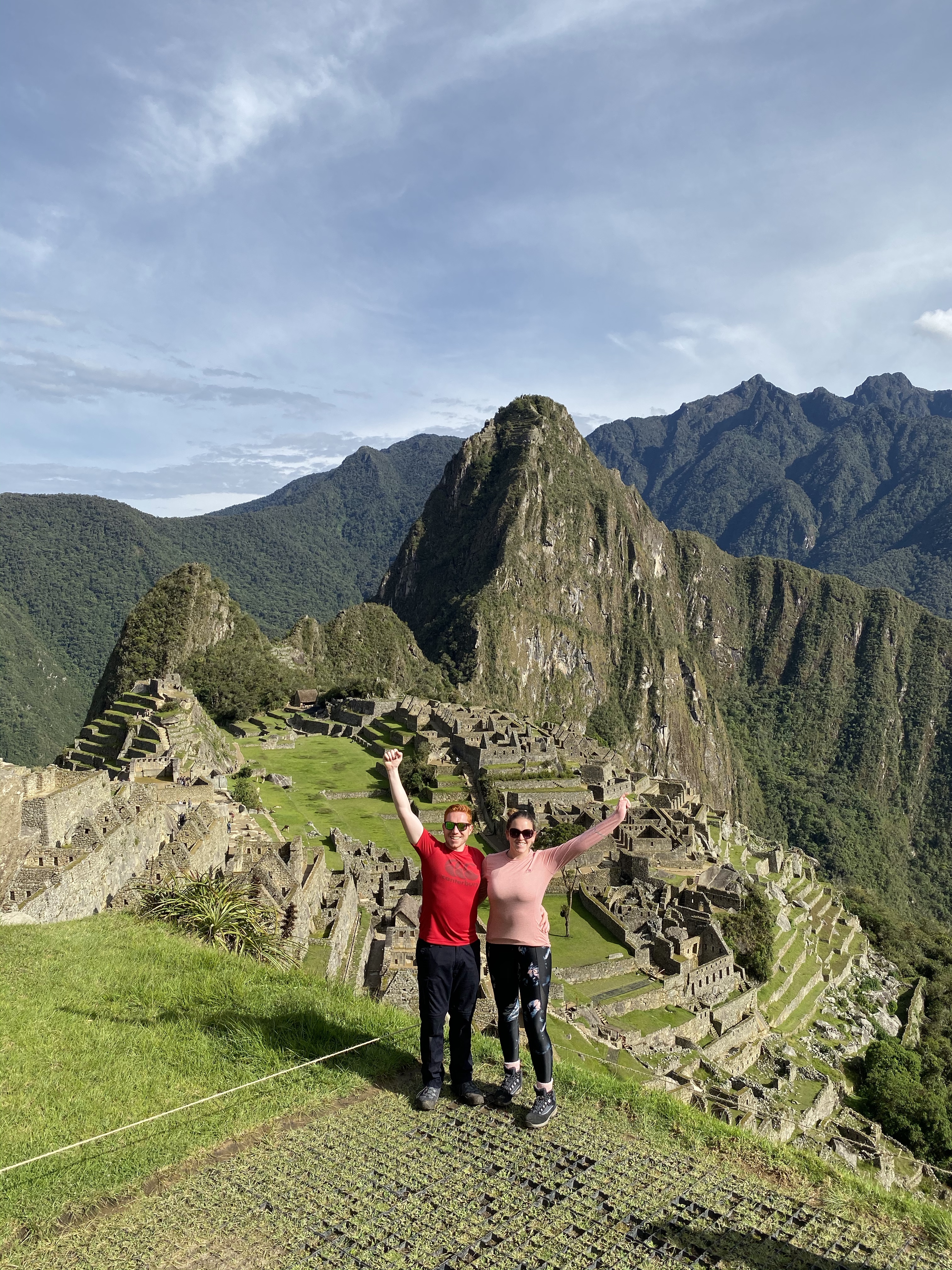
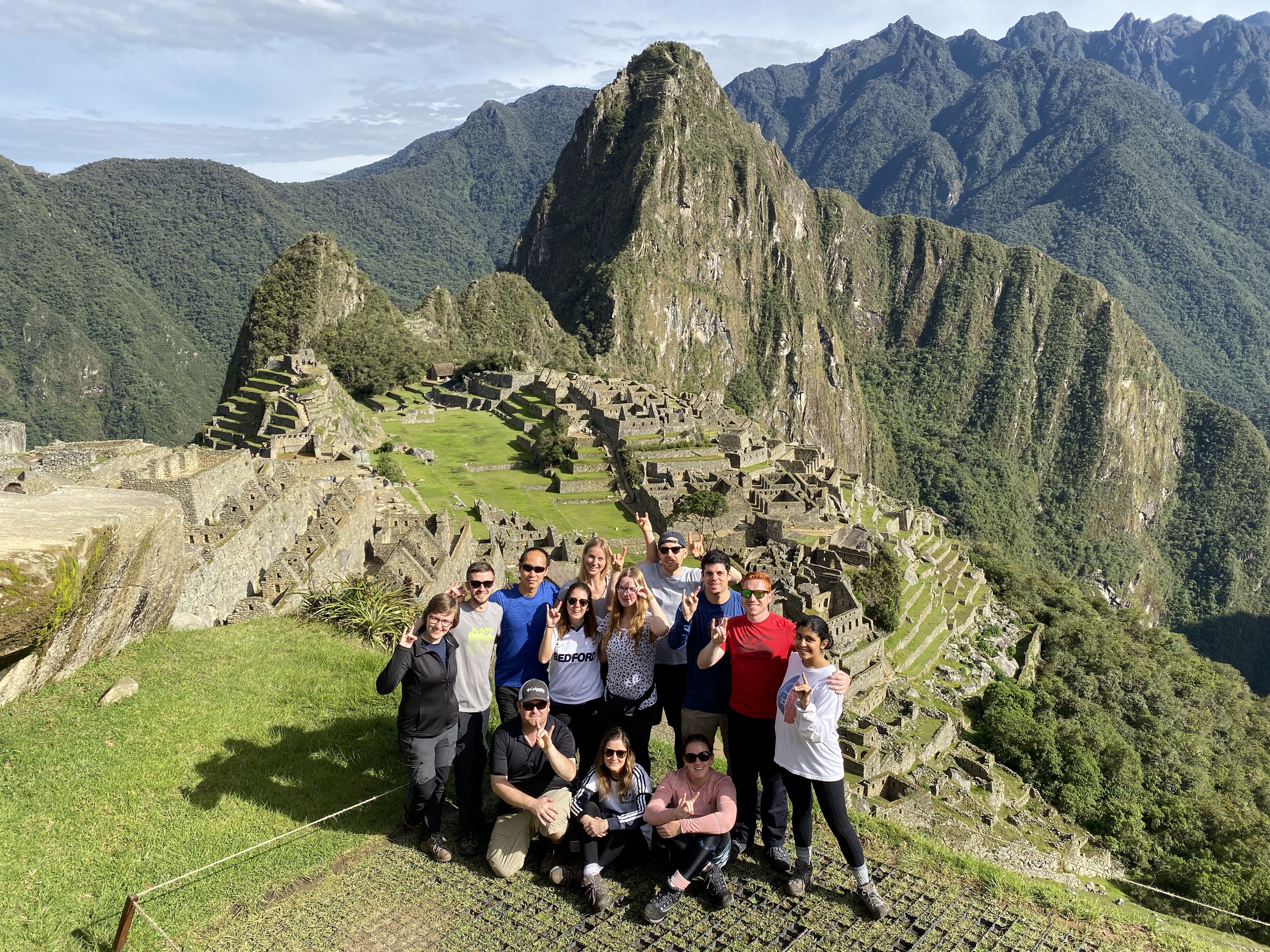
After taking some photos, we headed down to the bathrooms (almost the highlight of the trek – they were clean, they had toilet seats, there was running water!) and met Elmer, our tour guide who handed out tickets and ensured we received the official Machu Picchu stamp in our passports before we officially entered the site and started our tour.
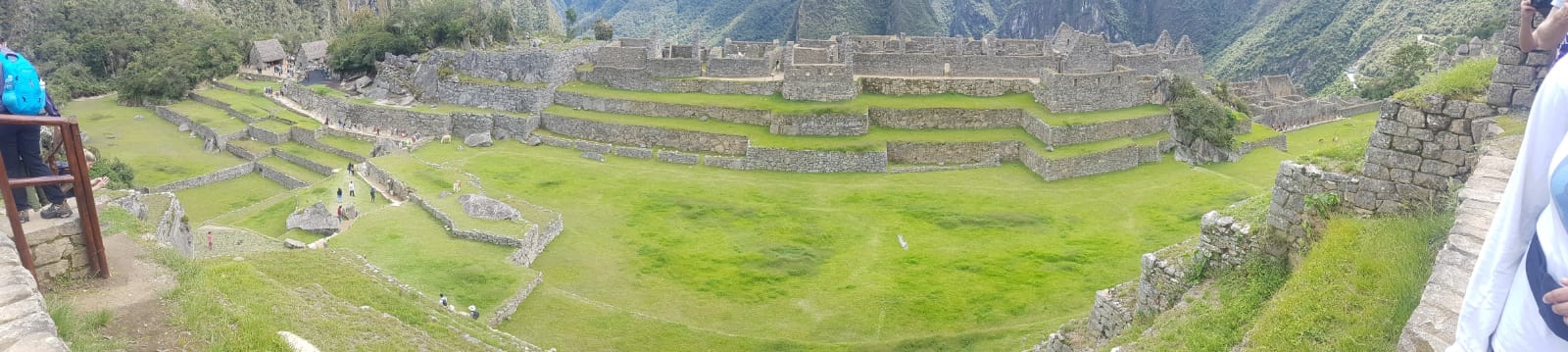
First stop: the terraces. These were primarily to prevent landslides but also had the secondary purpose of providing farmland. The bottom of each terrace would contain large stones, above which were smaller pebbles, then sand, then dirt. This allowed the water to drain efficiently and keep the ground moist enough to farm.
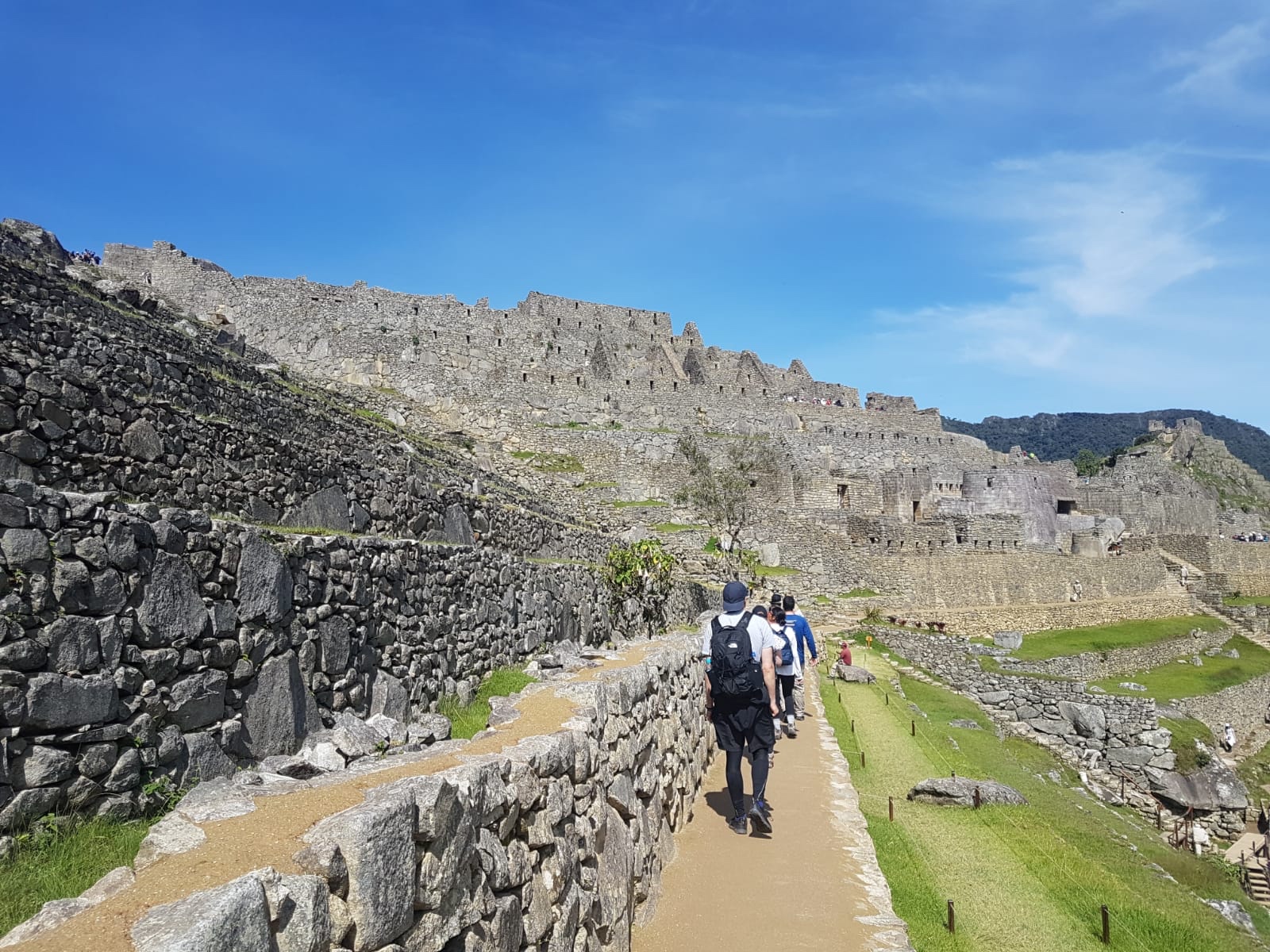
After the terraces, we moved on to the Temple of the Sun. This was particularly impressive for two reasons, the first being the building itself. The Inca did not have horses or donkeys, or wheels, or iron to make tools. Instead, granite rocks – some of which weighed tonnes – were taken from the quarry within the site and were broken down using the natural cracks in the rock through inserting wooden pegs and then filling it with water so the wood could swell and prise it further apart. This would be repeated until broken. These stones were cut so precisely that there would be no gaps between them, and the frequent earthquakes would simply make these rocks shake but not fall out of place. It is this style of building which allowed the ruins to remain in such good condition for so long.
The second reason the Temple of the Sun was so impressive was for its actual design. Semi-circular in shape with a door and two windows (one facing north, one facing east), the design allows for the sunlight to stream directly through a gap in the mountains and through one window on the summer solstice, and through a different gap and the other window on the winter solstice.
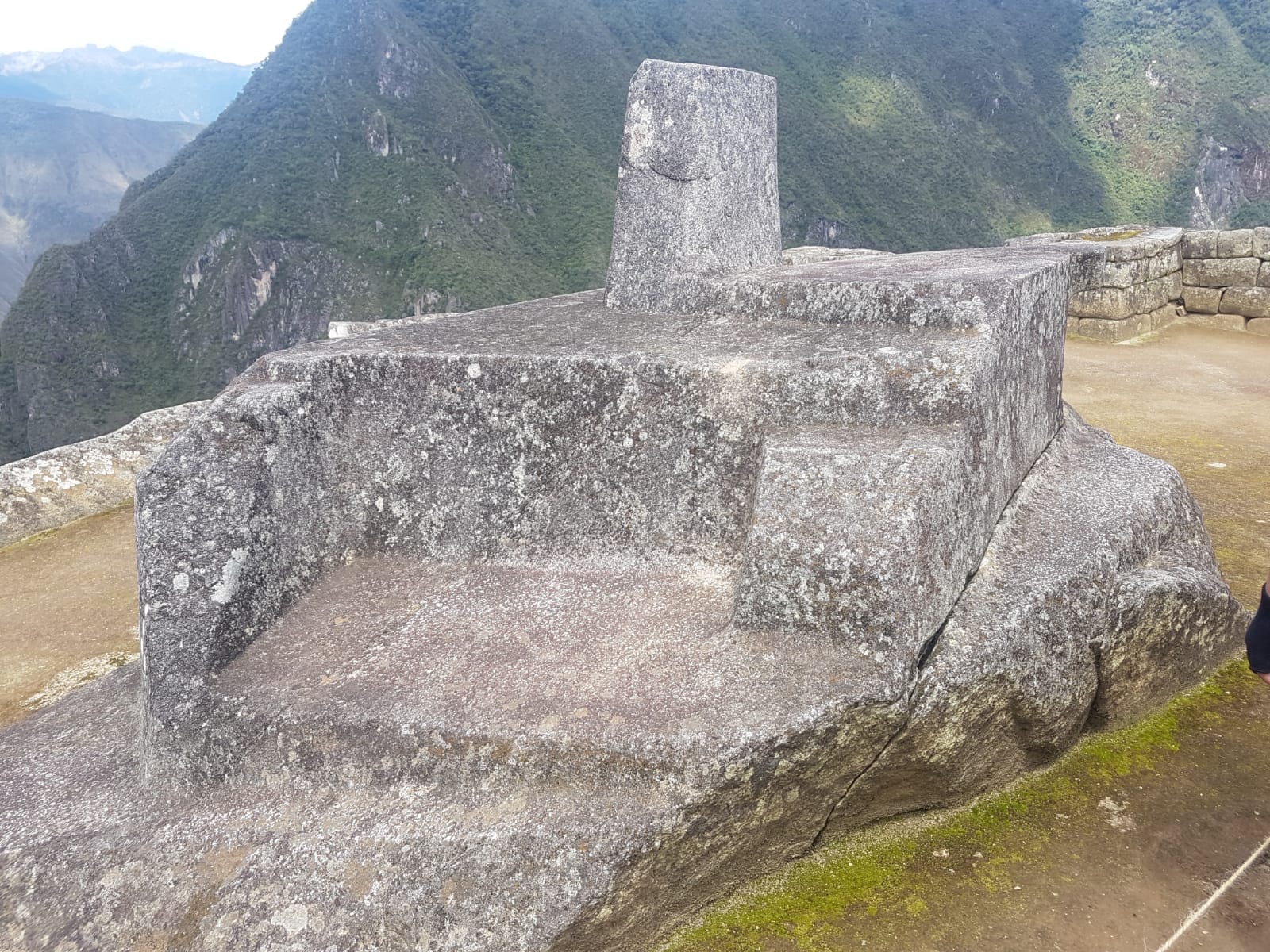
After this, we visited the compass stone (possibly not its real name). This was a kite-shaped rock which perfectly matched the four cardinal points – don’t worry, we didn’t just take their word for it, we tested it on an iPhone and are glad to report the Inca were correct! Next up was the sun dial which we rapidly filed past with no explanation, but here’s a photo anyway.
There were also some key rocks in the shape of important animals: there was a guinea pig rock and a condor rock which lots of local tourists were touching for luck. My favourite part, however, was the room with the water mirrors. These were built-in shallow bowls which contained water and allowed the Inca to track the movement of the sun.
The site itself was incredible, but our tired feet and weary bodies meant we couldn’t spend much longer walking around. We caught the bus down the winding mountain road to Machu Picchu town (also known as Aguas Calientes) and congregated in a restaurant. Here, we enjoyed a meal where I think everyone avoided eating soup and rice, after heavily overdosing on both during the trek!
Finally, we caught a train back to Ollantaytambo and a bus back to Cusco for our final meal altogether. It was an absolutely incredible trip with a great bunch of people and I would absolutely not hesitate to recommend G Adventures for the Inca Trail!
 Honeymoon Bootcamp